

Everything is Becoming Beige
A beautiful cocktail bar that I forgot almost immediately got me thinking about the difference between taste and originality – and how great ideas slowly become beige when too many people agree on them.
Authored By Jake Engel
A few weeks ago, I went to a local cocktail lounge I’d been excited to try. It was beautiful in every way a cocktail bar is supposed to be. The drinks were excellent, the music was just loud enough, and even the glassware felt intentional.
Yet, I left feeling strangely untouched.
Everything had been done well. But somewhere between walking through the front door and paying the bill, I never once felt surprised. By the time I got home, I couldn’t think of a single notable thing I’d tell someone else about it.
It was, in a word, beige. Since then, I’ve started noticing this everywhere.
The average experience today is undeniably better than it was ten or twenty years ago. Restaurants are more thoughtful. Hotels are more beautiful. Branding is more polished. Design has become dramatically more accessible. We’ve surrounded ourselves with better ideas, and the world is objectively nicer because of it.
So why does so much of it disappear from memory so quickly?
Maybe it’s because we’re all drawing from the same well. We admire the same brands, save the same inspiration, study the same trends, and build the same mood boards. None of that is inherently bad. In fact, it’s probably elevated the average quality of what we create. But somewhere along the way, I think we started confusing taste with originality.
They are certainly not the same thing.
Taste helps us recognize what’s beautiful. Originality asks us to create something that doesn’t yet have universal approval. One is built on pattern recognition. The other requires the uncomfortable belief that your instincts might be worth trusting before anyone else can validate them.
Yet, the places, messages, and advertisements I still think about years later almost always have one thing in common: somewhere along the way, someone made a decision another person probably argued against. Maybe it wasn’t the most universally appealing choice. Maybe it wasn’t backed by data, trends, or best practices. But it gave the work something increasingly rare – a point of view.
As a culture, we’ve become remarkably good at making things people will like. Along the way, I’m not sure we’ve become as interested in making things they’ll never forget.
Maybe beige isn’t a color after all. Maybe it’s what happens when originality slowly gives way to consensus because consensus is predictable and easy to defend.
That’s probably why it’s so difficult to recognize. Nobody wakes up trying to make something forgettable. Every decision is reasonable. Every stakeholder genuinely believes they’re making the idea stronger. Until one day, the work no longer feels like it belongs to anyone.
I keep thinking about that lounge, and how easy it is to build a room that is perfectly nice and completely unnoticeable. It is making me look at my own work differently.
The next time you create something that everyone in the room immediately agrees on, look closer. Are you proud of it, or did you just build another beautiful, forgettable cocktail bar?
The hardest part about beige is that almost nobody chooses it. They arrive there together.

It’s Too Soon Too Tell
What if you’re wrong about what’s happening to you right now? A reminder that we’re remarkably quick to decide what something means – when sometimes, it’s simply too soon to tell.
Authored By Jake Engel
I’ve changed my mind about some of the best and worst things that have ever happened to me.
Things I once considered disasters eventually became turning points, while things I was certain I wanted became things I was grateful to leave behind. People I barely noticed became important to me. People I thought would be around forever became people I used to know. Decisions that once kept me awake at night are now difficult to remember making.
What I find funny is how confident I was about all of it at the time.
We’re remarkably quick to decide what something means while it’s still happening. Something doesn’t work out? We call it a failure. We don’t know what comes next, then decide we’re lost. Someone else gets somewhere faster and suddenly we’re behind.
I’m particularly bad about wanting the clarity of hindsight without waiting for the hindsight. I want to know whether I made the right decision while I’m still making it, whether something was worth it before I know what came from it, and whether this strange little stretch of life is leading somewhere I’ll eventually be glad I went.
Unfortunately, the future has been extremely stingy with spoilers.
I found a line in the notes app on my phone from January 14, 2021 recently. I’m not sure where it’s from or who said it, but it was worth jotting down at the time: It’s too soon to tell.
I think I like it because it leaves room for life to surprise me without insisting the surprise has to be good.
We seem to have an enormous appetite for turning whatever happened most recently into evidence about how our entire lives are going. One bad week becomes "I’m unhappy." One rejection becomes "I’m not good enough." A few months without obvious progress becomes "I’m falling behind." We take a tiny sample size from a life that will hopefully contain thousands more days and start drawing conclusions from it.
Sometimes those conclusions will be right. Sometimes something really does suck, and no amount of perspective will eventually reveal it to have been a beautiful gift from the universe. “It’s too soon to tell” doesn’t ask me to pretend something good is coming. It just reminds me that I don’t have to decide what everything means immediately. Because I've been wrong before.
I've worried about things that worked themselves out, mourned things I eventually stopped wanting, and been disappointed by things that later mattered very little. I've also underestimated people and moments that became far more important than I could've known at the time.
And maybe that’s the lesson: not everything needs an explanation while I’m still in the middle of it. Sometimes I just need to give life enough time to prove me wrong again.
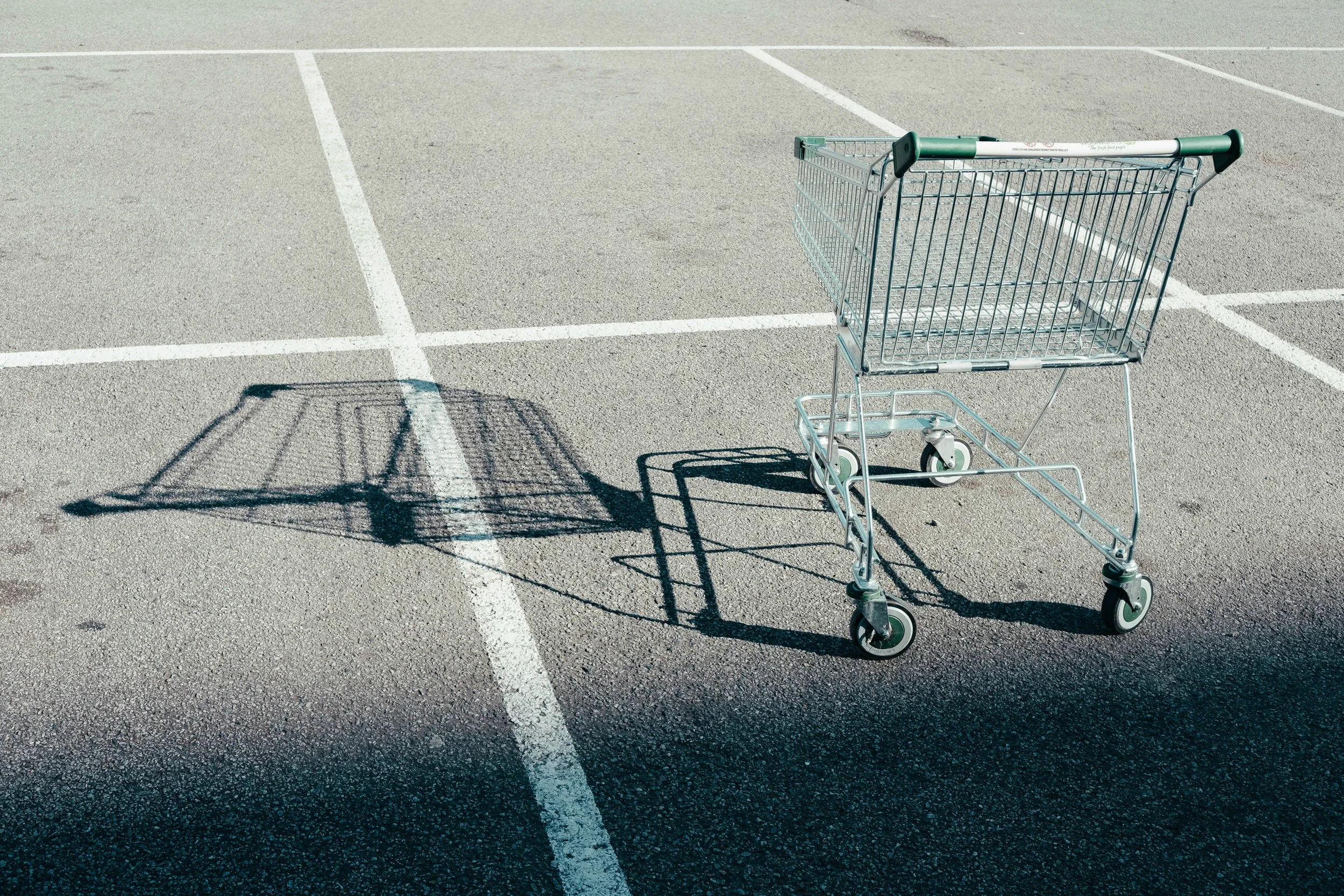
The Loneliness Of Optimization
What if making life easier has also made other people optional? A grocery-store hug sent me down a rabbit hole about convenience, randomness, and the small human interactions we may have accidentally optimized out of our lives.
Authored By Jake Engel
I got a hug in the grocery store last week.
This isn't normally noteworthy. I've received hugs before, and grocery stores have certainly seen stranger things. But this one came from an old coworker I hadn't seen in a long time. A few aisles earlier, I'd run into someone else from my past, and we'd stood there talking long enough that I temporarily forgot whatever I was supposed to be buying.
I left with my groceries and this little feeling that I'd gotten something else from the trip, too. On the drive home, I realized how easily I could've missed all of it.
Most weeks, I don't wander through a grocery store. I open the Kroger app, press a button, and have everything arrive at my door. I can buy almost anything without entering a store, deposit a check without entering a bank, work without entering an office, and get almost anywhere without asking another person how to get there. I love these conveniences and have absolutely no interest in giving them back.
But driving home, I started wondering whether, while we were busy making everything easier, we also made other people increasingly optional.
We make time for the important people in our lives. Friends, family, coworkers. I'm thinking about everyone else – the people who used to populate the edges of our ordinary lives.
Growing up in small-town Seymour, Indiana, I remember riding through the bank drive-thru with my mom and waiting for the pneumatic tube to come back, mostly because there was a decent chance a Dum Dum would be inside. I had a barber who knew which guard to use without checking my preferences on his iPad. Years later, I worked in a building where the same cafeteria staff made my breakfast and lunch for so long that we knew one another in that peculiar way you can know someone without ever deciding to become friends.
None of these were important relationships. They happened because life required me to keep showing up in the same places. Today, it increasingly doesn't.
We've spent decades removing friction from our lives, usually for very good reasons. The errand becomes a delivery. The teller becomes an app. The commute disappears. Each trade seems worth making on its own. Yet, I'm less sure about what happens when we make all of them at once.
An ordinary day used to require small interactions with people you hadn't chosen. You asked someone for directions. You talked to the person behind the counter. You sat next to a coworker you might never have picked as a friend and, after enough time together, somehow became one anyway. Together, those interactions created a background hum of human contact that I don't think we fully appreciated until we started designing it away.
Now I can have an extraordinarily productive day entirely by myself.
We've never had more ways to communicate, yet so much of connection has to be deliberately arranged. We schedule dinner. We plan the coffee. We choose the people we follow and the communities we join. Even our social lives can become optimized around the people we already know and the things an algorithm has learned we're most likely to enjoy.
What's disappearing is randomness, and randomness did more work than I think we gave it credit for.
It gave us familiar strangers – people whose names we might not know but whose presence made somewhere feel like ours. It put us next to people we wouldn't have chosen long enough to discover that we liked them. Sometimes it simply reminded us that there were thousands of other lives unfolding alongside our own.
Maybe that's part of why loneliness feels so strange now. We tend to describe it as not having enough people, but there's another version: having plenty of people in your life while having fewer moments when you feel surrounded by people at all.
Optimization can create that world without ever feeling like anything has been taken away. We get time back. We avoid traffic. The package appears. The groceries arrive. Everything works exactly as intended.
I don't want to make life deliberately inconvenient, and I certainly don't want to return to the era when my mom printed MapQuest directions before we drove to the Children's Museum. I want the faster route, the shorter line and the delivery when I need it.
But efficiency is a strange thing to maximize without limits, because eventually we have to ask what all those saved minutes are actually for.
Maybe a little of what we're looking for is hiding in the time we've worked so hard to save.
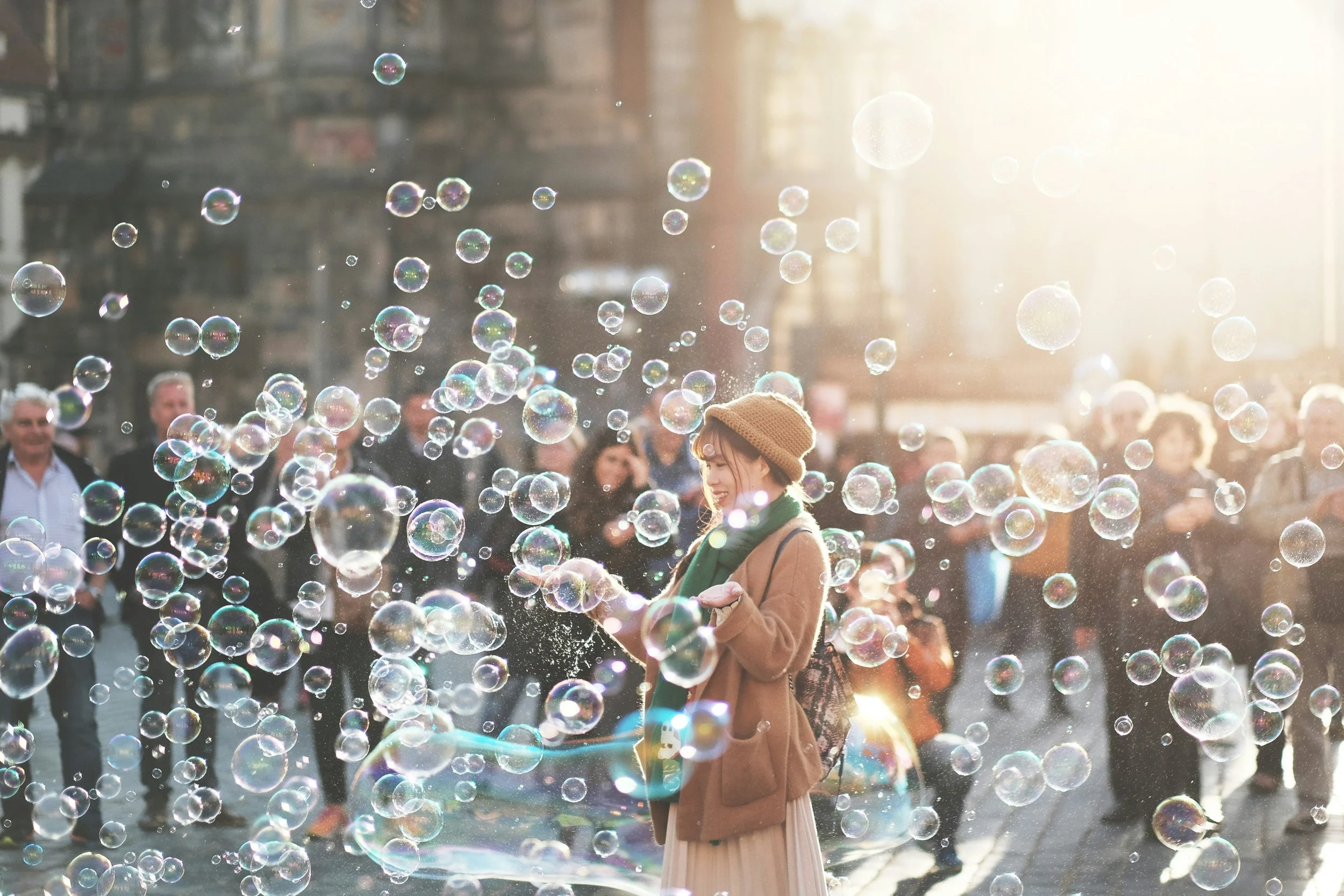
Your Brand Needs a Bubble Gun
A bubble gun got me into a bar in Austin. The people made me come back – a small lesson in why the best brands aren’t just good at getting attention, but making sure the experience lives up to it.
Authored By Jake Engel
While I was in Austin, Texas last week, I kept going back to the same bar near my hotel. Not because of their drink specials. Not because of a Google review. But because of a bubble gun.
Yep. A bubble gun!
There were probably fifty bars on that street offering the same food and drinks. But this one created energy. The employees were outside dancing, laughing, blasting bubbles into the air, and waving people in. The music was louder. The vibe was lighter. And it worked – I walked in. So did a lot of other people.
But here’s the thing: the bubble gun brought me in, but it wasn’t what made me go back.
The people were.
Our server asked for our names and actually remembered them. She gave us her personal list of favorite spots to check out. She told us when she was working next and asked us to come see her again. And we did – because she made us feel like we mattered.
And we were greeted with a loud “JAKE! JOSH!” when she saw us the very next day.
And that’s the part I can’t stop thinking about.
The bubble gun got my attention. But the culture they’d created made it stick.
If the staff inside had been cold or less fun, if the vibe didn’t match the energy outside – the bubble gun would’ve felt cheap, gimmicky, and like a marketing bait-and-switch.
But nope, they found the perfect alignment of their external brand and their internal culture.
You can have the best campaign, the flashiest ad, the sexiest new idea. But if your people and your experience don’t back it up – it falls flat. Or worse, it harms your reputation. Because people can feel the difference between a brand that’s aligned and one that’s just putting on an external show.
So yeah, your brand needs a bubble gun. Something fun and unexpected.
But even more than that – your culture has to match it.